
Tunisia’s Crackdown on Anti-Racism Activists: 8-Year Sentence for Saadia Mosbah and Mnemty – What Happens Next?
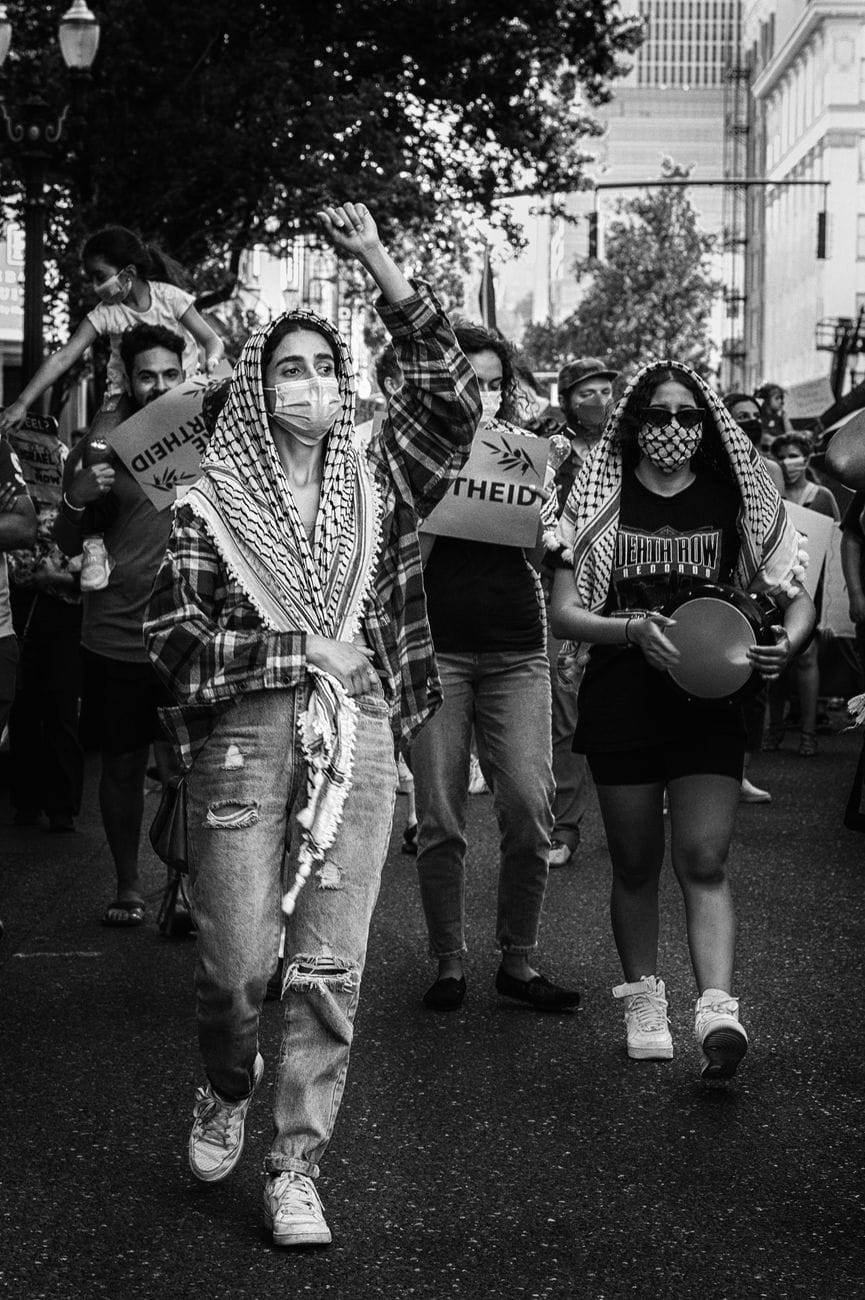
Tunis, Tunisia, MMN Correspondent: Imagine building an organization dedicated to equality and justice, only to see it dismantled by the very system you sought to improve. That is the reality facing Saadia Mosbah, a prominent Black human rights defender, and five colleagues from the anti-racist organization Mnemty. Their story is not just a legal battle; it is a window into a broader struggle for democracy and racial justice in Tunisia.
In May 2024, Mosbah was arrested as part of a sweeping crackdown on civil society. Since then, she has remained in detention, awaiting a verdict that finally came on March 19, 2026. The Tunis Court of First Instance sentenced her to eight years in prison and fined her approximately TND 122,000 (around EUR 36,000). Five other staff members received prison terms ranging from one to three years, with fines up to TND 64,000 (about EUR 19,000). One defendant was convicted in absentia after fleeing the country.
The charges? Money laundering and illicit enrichment. But here is the catch: investigators presented no credible evidence of illegal funding or financial misconduct. Instead, they relied on a broad interpretation of the law, a tactic often used to criminalize legitimate humanitarian work. Legal experts note that such provisions are frequently misapplied in Tunisia to target critics, especially those from marginalized communities.
What makes this case particularly troubling is its racial dimension. Mosbah and two other defendants are Black Tunisians, a demographic already facing systemic discrimination. Reports confirm that Mosbah endured racist abuse and a physical assault while in custody, allegations that authorities have yet to investigate. These incidents may constitute torture under international law. During the trial, racial discrimination was evident but ignored by judicial officials, undermining the right to a fair trial and exposing deep-seated institutional bias.
The political context adds another layer. Since 2023, President Kais Saied has repeatedly used rhetoric that stigmatizes civil society organizations, equating advocacy on migration, anti-racism, and human rights with foreign interference or national threat. This narrative has fueled a coordinated campaign to discredit NGOs like Mnemty, portraying them as subversive rather than essential pillars of democratic accountability.
Mnemty itself has faced relentless pressure. In addition to the criminal proceedings, the government initiated dissolution proceedings against the organization on May 11, 2026. These legal actions mirror a wider trend across Tunisia, where civil society groups are subjected to court-ordered suspensions, asset freezes, and threats of closure. Similar tactics were previously used against other human rights organizations, including those working on labor rights and gender equality.
The appeal hearing is set for June 19, 2026, and the stakes could not be higher. The appellate court’s decision could either rectify a grave injustice or further entrench a culture of impunity. International human rights organizations, including Amnesty International, have called for the immediate and unconditional release of Mosbah and her colleagues, urging Tunisia to halt its systematic dismantling of civic space.
This case is not isolated. It reflects a growing global concern about the criminalization of activism, particularly in countries where authoritarian trends are gaining ground. According to the World Justice Project’s 2025 Rule of Law Index, Tunisia ranks poorly in protections for freedom of expression and association, with civil society actors facing increasing legal and physical risks. The United Nations Human Rights Council has also expressed alarm over the deteriorating environment for human rights defenders in North Africa.
The implications extend beyond Tunisia. When governments use financial crimes to punish peaceful advocacy, they send a chilling message to all who dare to speak truth to power. The targeting of Black activists like Mosbah reveals a deeper issue: the intersection of race, class, and political repression. In many post-colonial societies, racial minorities remain disproportionately affected by state violence and legal marginalization, especially when they challenge entrenched power structures.
Experts emphasize that the absence of transparency in financial audits and the lack of independent oversight make it easier for authorities to fabricate charges against NGOs. In Tunisia, no public records were made available to substantiate the claims of illicit enrichment. Without access to financial documents or audit trails, the entire basis of the prosecution crumbles.
Furthermore, the fact that multiple individuals were convicted based on identical legal arguments, without individualized evidence, raises serious concerns about procedural fairness. Judicial independence in Tunisia has come under increasing strain, with courts perceived as aligned with executive interests rather than impartial arbiters of justice.
As the world watches, the outcome of this appeal will serve as a litmus test for Tunisia’s commitment to human rights, the rule of law, and inclusivity. Will the judiciary uphold constitutional protections, or will it continue to serve as a tool of political suppression?
For now, the international community remains vigilant. Advocacy groups are mobilizing petitions, pressuring diplomatic missions, and calling for sanctions if the verdict is upheld. The case of Saadia Mosbah and Mnemty has become emblematic of a larger struggle: the fight to protect the fundamental rights of expression, assembly, and equality in the face of state overreach.
Ultimately, the story of Mnemty is not just about one organization or one trial. It is about the future of democracy in Tunisia and the courage of those who defend it, even at great personal cost.
Related in Social Justice
Social Justice
Africa’s Albinism Crisis: 2025 Court Ruling That Could Save 100,000 Lives
Imagine being hunted for your body parts. Not because of a crime you committed, but because of a condition you were born with. For tens of thousands of people across Africa, this is not a horror movie. It is daily life. But in February 2025, a single court decision changed every…
Read More...
Social Justice
What Happened After 28 Died in Sri Lanka’s Prison Riots? Two More Inmates Dead in Transfer – Demands for Answers Grow
Just days after a brutal two day clash inside Negombo Prison left at least 28 people dead and over 100 injured, two more inmates have died. Not from the violence inside the walls, but shortly after being moved to other facilities. The question now is: what really happened during…
Read More...
Social Justice
What 50 Years of Civil Rights Battles in North Carolina Can Teach Us About the Future of Voting Access
What does it take to keep fighting for justice when the rules keep changing? On July 21, 2026, two of North Carolina’s most influential civil rights figures will sit down together in Durham to answer that question. Leslie Winner and Angela Bryant have spent decades on the front…
Read More...
Social Justice
What North Carolina’s Civil Rights Icons Reveal About Voting Rights in 2026: A Fireside Chat You Can’t Miss
Imagine sitting just a few feet away from the people who literally rewrote the rules of American democracy. That’s the kind of evening the Southern Coalition for Social Justice is offering on July 21, 2026. They’re hosting a fireside conversation called *North Carolina Icons: Th…
Read More...
Social Justice
What Happens When a Peaceful Protest Against a Coal Mine Leads to a 2-Year Prison Sentence? The Esra Işık Case in Turkey
Imagine standing up for a forest you love, a place where your neighbors grow food and your children play. Now imagine that act of peaceful protest lands you in court, facing prison time. That is exactly what happened to Esra Işık, a Turkish environmental activist whose recent co…
Read More...
Social Justice
3 Sahel Nations Exit ICC: What This Means for Justice in West Africa
In a move that has captured global attention, Burkina Faso, Mali, and Niger have officially notified the United Nations of their decision to withdraw from the Rome Statute, the treaty that created the International Criminal Court (ICC). The UN Secretary General confirmed this de…
Read More...
Social Justice
450 Years for a Fireworks Protest? What the Prairieland ICE Case Means for Your Right to Speak Out
Imagine planning a Fourth of July celebration to lift the spirits of people held in immigration detention. You bring fireworks, music, and a few legally carried firearms. After thirty minutes, you pack up and go home. Now imagine being told that those thirty minutes will cost yo…
Read More...
Social Justice
What Happens When a Country Silences Its Media? Uganda’s Crackdown on Journalists and Activists Explained
On a single day in late June, Uganda’s media landscape changed dramatically. Six major news outlets were shut down. Journalists were locked out of their offices. Equipment was seized. No court order was shown. No public explanation was given. The question on many minds is simple…
Read More...
Social Justice
What Happens When a NATO Host City Bans All Protests for 13 Days? Turkey’s Move Raises Questions
Imagine your city suddenly goes silent. Not the quiet of a holiday, but the kind of silence that comes when the right to gather, to speak, to hold a sign, is taken away. That is exactly what is happening in Ankara right now. As Turkey prepares to host the 36th NATO Summit, autho…
Read More...
Social Justice
6.8 Magnitude Earthquake Hits Venezuela: What the Disaster Response Reveals About Human Rights
On the afternoon of June 24, 2026, the ground shook across Venezuela. A 6.8 magnitude earthquake struck multiple regions, from the northern coastal states to the central highlands. Within hours, neighborhoods in Maracaibo, Valencia, and Barquisimeto were reduced to rubble. Thous…
Read More...