
What 11 Million Cubans in the Dark Reveal About America’s Cuba Obsession
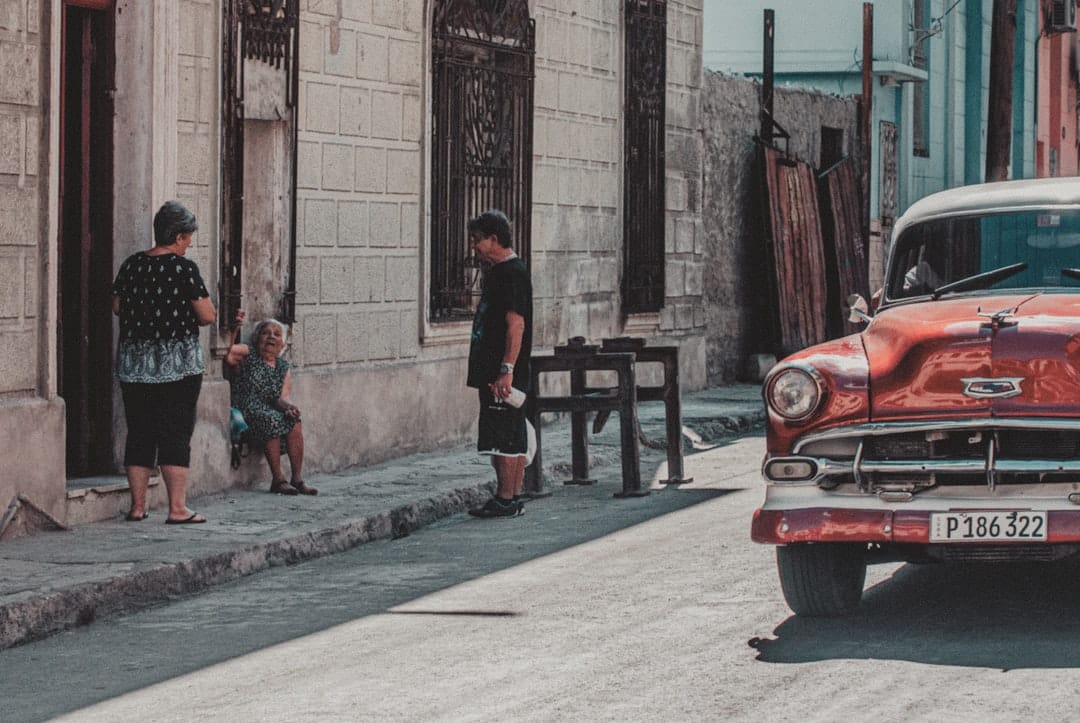
Havana, Cuba, MMN Correspondent: For decades, the United States has looked at Cuba through a lens of romanticized nostalgia. A tropical paradise frozen in time. Vintage cars gliding down cobblestone streets. The rhythm of son cubano pulsing through every alleyway. This image, carried by music, film, and political speeches, is not just a cultural memory. It is a carefully crafted fantasy. One that serves a very specific purpose.
Consider the song 'Chan Chan.' Composed in 1984 by Compay Segundo, it became a global symbol of Cuban identity. But in the American imagination, the track has been stripped of its deeper meaning. It plays in tourist brochures and movie soundtracks. Yet the lyrics name real places: Alto Cedro, Marcané, Cueto, Mayarí. These are towns in Holguín Province, near the Sierra Maestra where Fidel Castro began his revolutionary journey. They are landscapes of labor, resistance, and rural life. The U.S. public hears only rhythm, not reality.
This selective perception has real consequences. In May 2026, the U.S. Department of Justice unsealed an indictment against Raúl Castro, now 94, charging him with conspiracy related to the 1996 shootdown of two Brothers to the Rescue planes. The move was widely seen as symbolic. But it followed a Supreme Court ruling in *Havana Docks Corp. v. Royal Caribbean Cruises* that revived claims by American cruise lines seeking compensation for port facilities nationalized after the 1959 revolution. The decision set a precedent of $440 million and opened the door for hundreds of similar lawsuits. It effectively challenges the legitimacy of revolutionary land reforms.
These legal actions are part of a broader campaign of economic pressure. Since January 2026, the U.S. has intensified its blockade. Sanctions on oil suppliers. Halts on maritime shipments. Naval forces intercepting tankers bound for Cuba. The impact has been severe. In March alone, Cuba’s electrical grid collapsed three times. Eleven million people lost power. Hospitals canceled surgeries. Refrigeration failed. Food spoiled before reaching consumers. A single Russian tanker delivered only 730,000 barrels of crude oil enough for ten days of operations. The country teeters on the edge of systemic failure.
Meanwhile, U.S. intelligence agencies report that Cuba has acquired over 300 attack drones from Russia and Iran since 2023. The Shahed-136, capable of flying up to 1,500 miles, could reach cities like Miami, Key West, and Palm Beach. Officials maintain these are defensive tools meant to deter aggression. Cuban leaders have warned they would rather sacrifice their lives than allow a military invasion. The tension is palpable.
Yet the narrative remains skewed. The U.S. frames the blockade as pressure on a repressive regime. The human cost is often overlooked. Over 11 million Cubans live in darkness. Hospitals lack antibiotics. Families face hunger. The state’s response to domestic dissent, such as the 2021 protests led by Black Cubans chanting 'Patria y Vida,' has included harsh prison sentences. Artists like rapper Maykel 'Osorbo' Castillo serve nine years. Visual activist Luis Manuel Otero Alcántara received five. These cases reveal a government struggling to balance security with civil liberties.
Still, the Cuban people continue to resist. Not just through protest, but through everyday acts of resilience. In Havana, residents light candles made from remnants of old ceremonies when the power fails. Families gather to share meals prepared from whatever ingredients they can scavenge. Music plays on makeshift speakers. Disco balls, once symbols of decadence, are imagined as future beacons of joy. This is not mere survival. It is what scholars call the 'Black good life': a philosophy of dignity, creativity, and community forged under extreme duress.
The irony is stark. Americans demand that Cuba remain unchanged before it changes. Not out of love for its culture, but out of desire to reclaim it as a consumer destination. They want the past, not the present. The idea of returning to a pre-revolutionary Havana, where Meyer Lansky and Lucky Luciano ran casinos and brothels for American elites, is not nostalgia. It is imperialism dressed as tourism. That vision ignores the exploitation, inequality, and violence that defined that era.
The Cuban-American political class, led by figures like Marco Rubio, now Secretary of State, has long championed this agenda. Born to exiles, Rubio embodies the generational obsession with restoring lost property and influence. His policies reflect a belief that Cuba must return to its role as a playground for American capital. On May 20, Independence Day, supporters gathered at Miami’s Freedom Tower, sang the national anthem, and wept. They marked what they see as the long-awaited end of a 67-year exile.
But the dream is built on a foundation of denial. The U.S. cannot acknowledge that the suffering in Cuba is not incidental. It is structural. The blockade, the indictments, the property claims all are part of a deliberate strategy to dismantle the revolutionary state. And yet, the American public remains detached, viewing the crisis through the filter of entertainment or geopolitical theater.
What if the roles were reversed? Imagine a world where Americans looked southward with the same longing. Seeing the U.S. not as a beacon of democracy, but as a nation struggling with food deserts, medical shortages, and political instability. What if the press wrote about America’s crumbling infrastructure, its homeless encampments, and its eroding democratic institutions with the same detachment used to describe Cuba?
That inversion reveals the moral core of the issue. The capacity to reduce another nation’s suffering into a backdrop for consumption, whether as vacation, policy, or propaganda, is not just unethical. It is self-destructive. It erodes empathy, distorts justice, and prevents genuine understanding.
The real question is not whether Cuba will fall. It is whether America can finally see beyond its fantasy. The blockade does not just punish a government. It reproduces moral numbness in the American populace. To feel the pain of 11 million people in the dark requires more than policy change. It demands a transformation in consciousness.
As the world watches, one thing is clear. The dream of a restored pleasure colony is not about Cuba. It is about America’s inability to confront its own history, its own failures, and its own capacity for harm. Until that reckoning happens, the loop of 'Chan Chan' will keep playing. On repeat. Forever silent to the voices it was never meant to carry.
Related in Social Justice
Social Justice
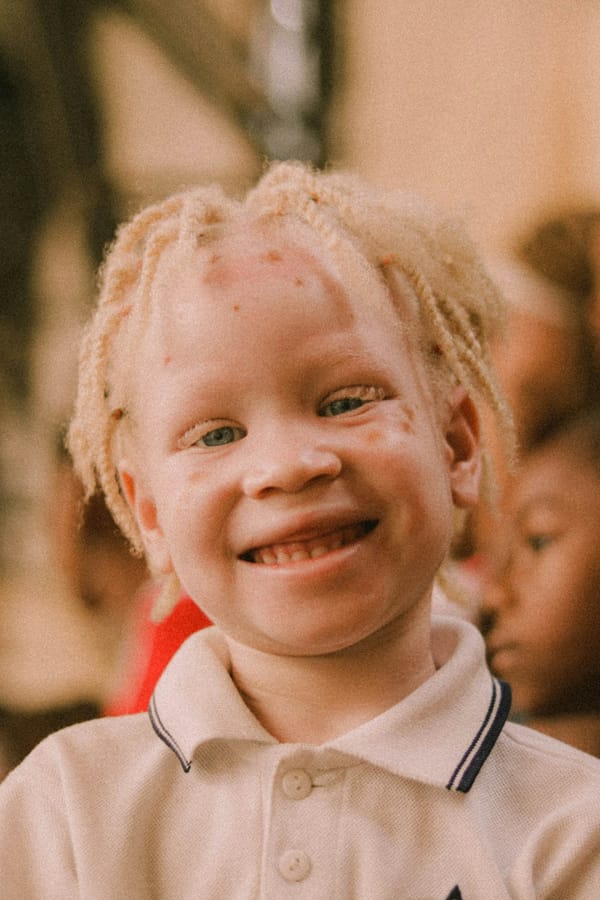
Africa’s Albinism Crisis: 2025 Court Ruling That Could Save 100,000 Lives
Imagine being hunted for your body parts. Not because of a crime you committed, but because of a condition you were born with. For tens of thousands of people across Africa, this is not a horror movie. It is daily life. But in February 2025, a single court decision changed every…
Read More...
Social Justice
What Happened After 28 Died in Sri Lanka’s Prison Riots? Two More Inmates Dead in Transfer – Demands for Answers Grow
Just days after a brutal two day clash inside Negombo Prison left at least 28 people dead and over 100 injured, two more inmates have died. Not from the violence inside the walls, but shortly after being moved to other facilities. The question now is: what really happened during…
Read More...
Social Justice
What 50 Years of Civil Rights Battles in North Carolina Can Teach Us About the Future of Voting Access
What does it take to keep fighting for justice when the rules keep changing? On July 21, 2026, two of North Carolina’s most influential civil rights figures will sit down together in Durham to answer that question. Leslie Winner and Angela Bryant have spent decades on the front…
Read More...
Social Justice
What North Carolina’s Civil Rights Icons Reveal About Voting Rights in 2026: A Fireside Chat You Can’t Miss
Imagine sitting just a few feet away from the people who literally rewrote the rules of American democracy. That’s the kind of evening the Southern Coalition for Social Justice is offering on July 21, 2026. They’re hosting a fireside conversation called *North Carolina Icons: Th…
Read More...
Social Justice
What Happens When a Peaceful Protest Against a Coal Mine Leads to a 2-Year Prison Sentence? The Esra Işık Case in Turkey
Imagine standing up for a forest you love, a place where your neighbors grow food and your children play. Now imagine that act of peaceful protest lands you in court, facing prison time. That is exactly what happened to Esra Işık, a Turkish environmental activist whose recent co…
Read More...
Social Justice
3 Sahel Nations Exit ICC: What This Means for Justice in West Africa
In a move that has captured global attention, Burkina Faso, Mali, and Niger have officially notified the United Nations of their decision to withdraw from the Rome Statute, the treaty that created the International Criminal Court (ICC). The UN Secretary General confirmed this de…
Read More...
Social Justice
450 Years for a Fireworks Protest? What the Prairieland ICE Case Means for Your Right to Speak Out
Imagine planning a Fourth of July celebration to lift the spirits of people held in immigration detention. You bring fireworks, music, and a few legally carried firearms. After thirty minutes, you pack up and go home. Now imagine being told that those thirty minutes will cost yo…
Read More...
Social Justice
What Happens When a Country Silences Its Media? Uganda’s Crackdown on Journalists and Activists Explained
On a single day in late June, Uganda’s media landscape changed dramatically. Six major news outlets were shut down. Journalists were locked out of their offices. Equipment was seized. No court order was shown. No public explanation was given. The question on many minds is simple…
Read More...
Social Justice
What Happens When a NATO Host City Bans All Protests for 13 Days? Turkey’s Move Raises Questions
Imagine your city suddenly goes silent. Not the quiet of a holiday, but the kind of silence that comes when the right to gather, to speak, to hold a sign, is taken away. That is exactly what is happening in Ankara right now. As Turkey prepares to host the 36th NATO Summit, autho…
Read More...
Social Justice
6.8 Magnitude Earthquake Hits Venezuela: What the Disaster Response Reveals About Human Rights
On the afternoon of June 24, 2026, the ground shook across Venezuela. A 6.8 magnitude earthquake struck multiple regions, from the northern coastal states to the central highlands. Within hours, neighborhoods in Maracaibo, Valencia, and Barquisimeto were reduced to rubble. Thous…
Read More...