
What Happened in Guayaquil? Ecuador’s Military Apologizes for 51 Disappearances – A Turning Point for Justice

Guayaquil, Ecuador: Nishant Shrivastava On June 5, 2026, inside a quiet ceremony room in Guayaquil, something rare happened. The Commander General of the Ecuadorian Air Force stood before a group of families and said the words they had waited years to hear: “We are sorry.” This was not a private meeting. It was a formal, public apology on behalf of the entire Armed Forces. The apology was directed at the families of four young men – Nehemías Arboleda Portocarrero, Steven Medina, Ismael Arroyo, and Josué Arroyo. They are known across Ecuador as “the four boys from Las Malvinas.”
These four young men disappeared on December 8, 2024, during a military operation along Ecuador’s coast. Their case became a symbol of something much larger: a pattern of state violence, systemic abuse, and a long history of silence from the institutions meant to protect citizens. But this ceremony was not just about four names. It was about more than 50 individuals who vanished under similar circumstances between 2019 and 2024. For the first time, the state acknowledged its role.
The event was organized by the Permanent Committee for the Defence of Human Rights in Guayaquil (CDH Guayaquil), the legal body representing victims of state-linked human rights violations. The room was filled with people who mattered: representatives from the Committee of Families for Truth and Justice, the Ombudsperson’s Office, members of the international community including the UN Working Group on Enforced or Involuntary Disappearances, and officials from the Ministry of Defence. Amnesty International was there too, offering support and recognition. This was not a small gesture. It was a carefully orchestrated step toward accountability.
Ana Piquer, Americas Director at Amnesty International, called it a “historic moment.” She emphasized that public apologies are not just symbolic gestures. They are a core part of comprehensive reparations for victims of enforced disappearance. Under international law, enforced disappearance is considered one of the most severe violations of human dignity. The Inter-American Court of Human Rights has ruled that when such acts are committed systematically with state involvement, they amount to crimes against humanity. In Ecuador, the pattern is clear: disappearances have followed military interventions along the coast, raising serious questions about the militarization of public security.
How did Ecuador get here? The roots trace back to 2019, when the government began deploying armed forces more frequently in civilian areas, especially in regions struggling with drug trafficking and organized crime. The intention was to restore order. But the results tell a different story. Operations often led to excessive force, arbitrary detentions, and people simply vanishing – many of them minors or young adults. Local human rights organizations have documented at least 51 disappearances since 2019, most linked to operations in Esmeraldas, Manabí, and Guayas provinces.
The Las Malvinas case became a national flashpoint when forensic teams discovered mass graves near the site of the December 2024 operation. DNA testing confirmed the identities of three of the four boys. The fourth is still missing. That discovery pushed the Constitutional Court of Ecuador to issue a landmark ruling in March 2026. The court ordered the state to take immediate action: public apologies, criminal investigations, and structural reforms within the Armed Forces. This was the first time a Latin American court explicitly required public apologies as part of reparative justice for enforced disappearance.
But even as the apology was delivered, shadows remained. Just three days before the ceremony, on June 2, 2026, reports emerged that a relative of one of the boys had been harassed by military patrols at her home. This is not an isolated incident. It points to a persistent culture of intimidation that undermines the credibility of state-led reconciliation. Ana Piquer condemned the harassment, calling it unacceptable and urging the Ministry of Defence to stop all forms of intimidation immediately. Protection mechanisms, she argued, must be institutionalized – not reactive or temporary.
A deeper challenge lies in the Armed Forces’ resistance to cooperate with investigations. Despite the Constitutional Court’s orders, military authorities continue to withhold information, citing classified data. This obstruction delays justice and erodes public trust. For true accountability, transparency is non negotiable. Victims and their families have a fundamental right to know what happened, who was responsible, and whether those responsible will face consequences. Without full access to records, investigations remain incomplete, and the risk of impunity stays high.
Amnesty International has made it clear: the Las Malvinas case must not stand alone. The path to justice should extend to all 51 missing persons. But without consistent political will and legal enforcement, many cases remain stalled. The international community, including the United Nations and regional human rights bodies, has repeatedly urged Ecuador to reform its security model. A return to a civilian led, rights respecting approach to public safety is essential. The current militarized strategy has not reduced crime effectively. Instead, it has fueled human rights violations, creating cycles of fear and mistrust.
The Constitutional Court’s recommended reforms include creating an independent oversight body for the Armed Forces, mandatory human rights training for military personnel, and establishing a national registry for all detainees. These measures are designed to build institutional safeguards that prevent future abuses and promote accountability. But implementation has been inconsistent. Political pressure, bureaucratic inertia, and institutional resistance have slowed progress, leaving families in a painful state of waiting.
Ecuador now stands at a crossroads. The Guayaquil ceremony offers a glimpse of what is possible when institutions confront their past with honesty. A public apology, when backed by action, can open doors to healing, reconciliation, and a stronger democracy. For the families of the disappeared, this moment provides a fragile sense of recognition. But lasting peace will come only when every family receives answers, when every victim is accounted for, and when no child is ever taken again in the name of security. The world is watching closely – not just to see if Ecuador fulfills its promises, but to learn how any nation can face its darkest chapters with courage, compassion, and unwavering resolve.
Related in Social Justice

Social Justice
Africa’s Albinism Crisis: 2025 Court Ruling That Could Save 100,000 Lives
Imagine being hunted for your body parts. Not because of a crime you committed, but because of a condition you were born with. For tens of thousands of people across Africa, this is not a horror movie. It is daily life. But in February 2025, a single court decision changed every…
Read More...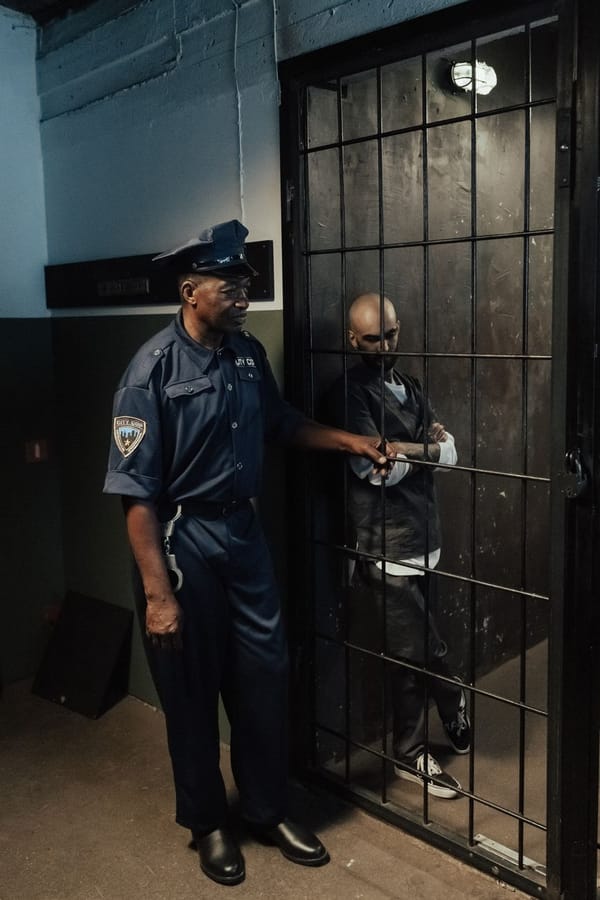
Social Justice
What Happened After 28 Died in Sri Lanka’s Prison Riots? Two More Inmates Dead in Transfer – Demands for Answers Grow
Just days after a brutal two day clash inside Negombo Prison left at least 28 people dead and over 100 injured, two more inmates have died. Not from the violence inside the walls, but shortly after being moved to other facilities. The question now is: what really happened during…
Read More...
Social Justice
What 50 Years of Civil Rights Battles in North Carolina Can Teach Us About the Future of Voting Access
What does it take to keep fighting for justice when the rules keep changing? On July 21, 2026, two of North Carolina’s most influential civil rights figures will sit down together in Durham to answer that question. Leslie Winner and Angela Bryant have spent decades on the front…
Read More...
Social Justice
What North Carolina’s Civil Rights Icons Reveal About Voting Rights in 2026: A Fireside Chat You Can’t Miss
Imagine sitting just a few feet away from the people who literally rewrote the rules of American democracy. That’s the kind of evening the Southern Coalition for Social Justice is offering on July 21, 2026. They’re hosting a fireside conversation called *North Carolina Icons: Th…
Read More...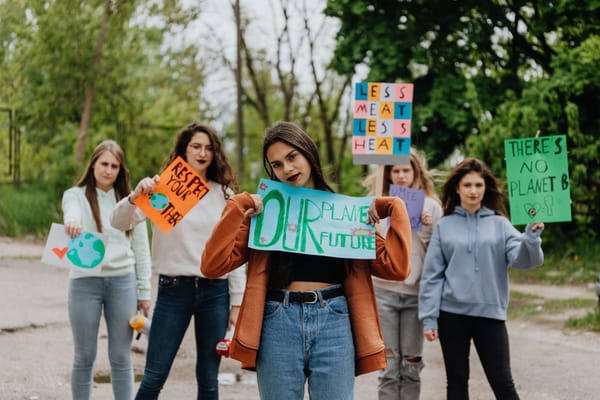
Social Justice
What Happens When a Peaceful Protest Against a Coal Mine Leads to a 2-Year Prison Sentence? The Esra Işık Case in Turkey
Imagine standing up for a forest you love, a place where your neighbors grow food and your children play. Now imagine that act of peaceful protest lands you in court, facing prison time. That is exactly what happened to Esra Işık, a Turkish environmental activist whose recent co…
Read More...
Social Justice
3 Sahel Nations Exit ICC: What This Means for Justice in West Africa
In a move that has captured global attention, Burkina Faso, Mali, and Niger have officially notified the United Nations of their decision to withdraw from the Rome Statute, the treaty that created the International Criminal Court (ICC). The UN Secretary General confirmed this de…
Read More...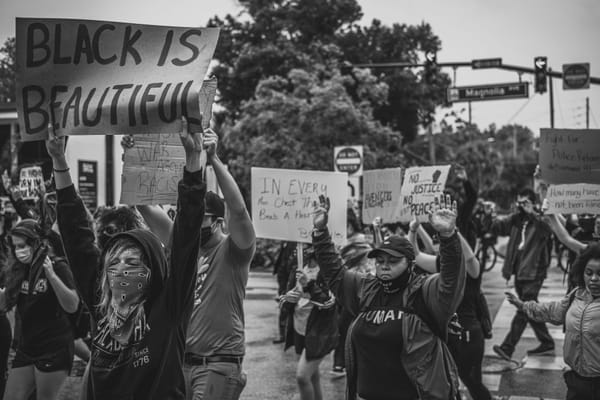
Social Justice
450 Years for a Fireworks Protest? What the Prairieland ICE Case Means for Your Right to Speak Out
Imagine planning a Fourth of July celebration to lift the spirits of people held in immigration detention. You bring fireworks, music, and a few legally carried firearms. After thirty minutes, you pack up and go home. Now imagine being told that those thirty minutes will cost yo…
Read More...
Social Justice
What Happens When a Country Silences Its Media? Uganda’s Crackdown on Journalists and Activists Explained
On a single day in late June, Uganda’s media landscape changed dramatically. Six major news outlets were shut down. Journalists were locked out of their offices. Equipment was seized. No court order was shown. No public explanation was given. The question on many minds is simple…
Read More...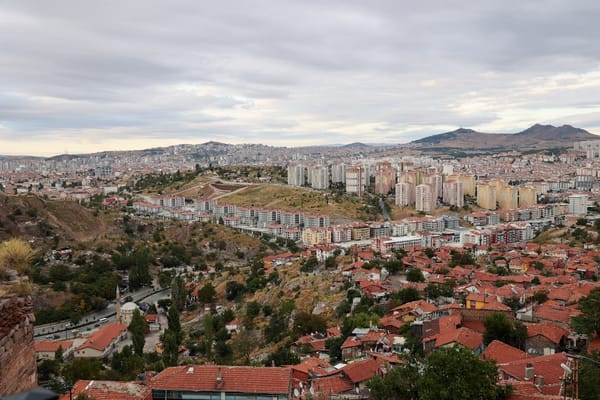
Social Justice
What Happens When a NATO Host City Bans All Protests for 13 Days? Turkey’s Move Raises Questions
Imagine your city suddenly goes silent. Not the quiet of a holiday, but the kind of silence that comes when the right to gather, to speak, to hold a sign, is taken away. That is exactly what is happening in Ankara right now. As Turkey prepares to host the 36th NATO Summit, autho…
Read More...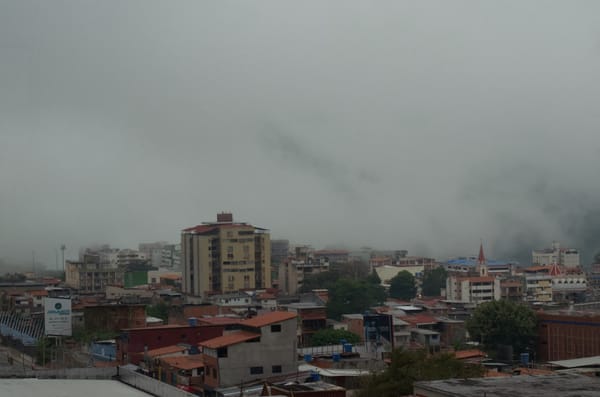
Social Justice
6.8 Magnitude Earthquake Hits Venezuela: What the Disaster Response Reveals About Human Rights
On the afternoon of June 24, 2026, the ground shook across Venezuela. A 6.8 magnitude earthquake struck multiple regions, from the northern coastal states to the central highlands. Within hours, neighborhoods in Maracaibo, Valencia, and Barquisimeto were reduced to rubble. Thous…
Read More...