
Why a Historian Who Died in 2010 Still Sparks Classroom Bans and Political Fury Across America
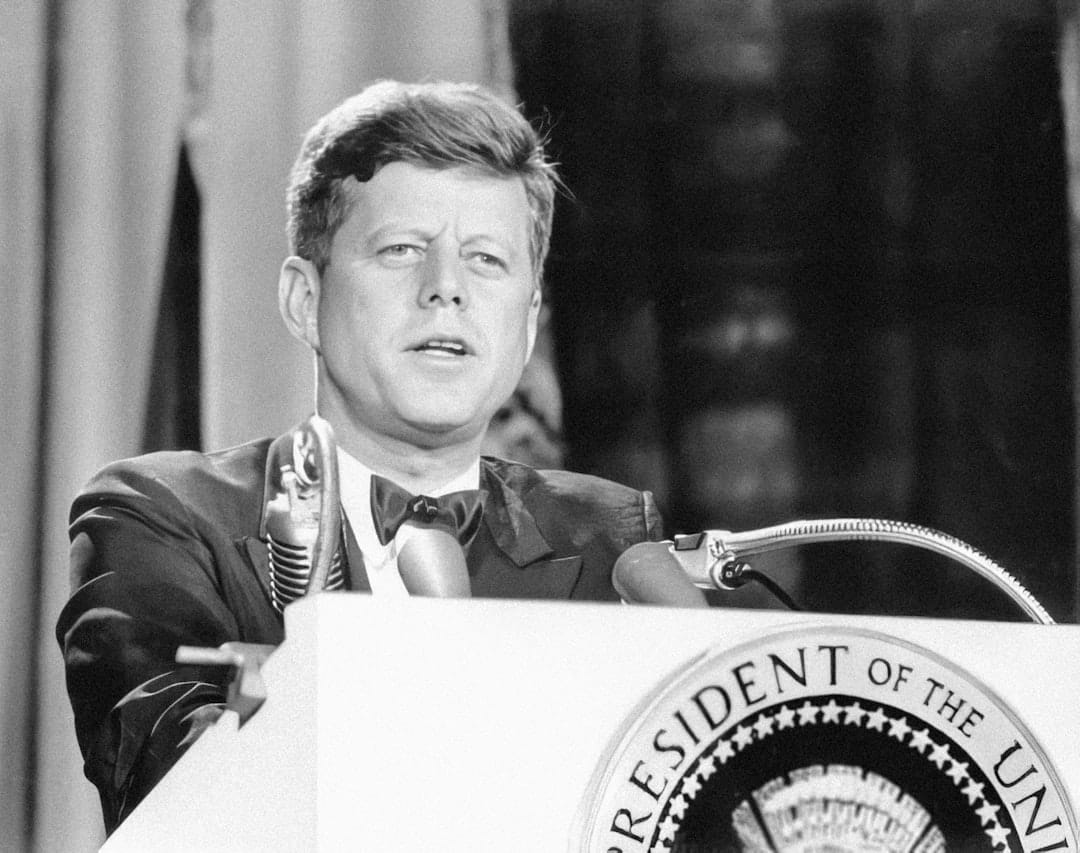
Washington D.C., MMN Correspondent: In the summer of 2020, as millions of Americans filled city streets to protest the murder of George Floyd, President Donald Trump stood at the National Archives Museum and delivered a speech that surprised many. Instead of addressing systemic injustice or calling for reform during a national crisis marked by a pandemic, economic hardship, and racial unrest, he focused his attention on a historian who had passed away a decade earlier. Trump accused Howard Zinn of indoctrinating students with left wing propaganda that made young people ashamed of their country's history. This moment was not a random outburst. It was a calculated act of political theater that revealed something deeper about how those in power view history written from the perspective of ordinary people, resistance movements, and marginalized communities.
Zinn, who died in 2010, wrote A People's History of the United States, a book that changed how American history is taught and understood. Instead of focusing on presidents, generals, and corporate leaders, Zinn placed workers, abolitionists, Indigenous peoples, women's rights activists, and civil rights marchers at the center of the story. His approach challenged the traditional narrative that presents U.S. history as a smooth path of progress driven by elite leadership. Zinn emphasized struggle, sacrifice, and grassroots action, showing how meaningful change has always come from below.
There is a rich irony in Trump's condemnation. While claiming to defend American values, the president attacked a historian whose life embodied those very values: justice, dissent, and civic courage. Zinn served as a bombardier in World War II, but his wartime experience led him to question the morality of war, especially when it targeted civilians. He later became a vocal opponent of the Vietnam War, traveling to Hanoi in 1967 as part of a peace delegation. This was a bold move during a time when anti war sentiment was often criminalized.
His activism extended into the civil rights movement. As a professor at Spelman College in Atlanta during the 1950s and 60s, Zinn worked closely with student activists, helping to organize sit ins and voter registration drives. He stood alongside figures like Martin Luther King Jr., though he never sought fame. His commitment to racial justice came from lived experience. He witnessed firsthand the brutality of segregation and the resilience of Black communities fighting back.
Zinn's legacy is not just in his books but in his philosophy. He believed history should not be a passive record of events but a living tool for empowerment. He argued that where one stands in society shapes how one sees the past. A slave in the antebellum South would interpret the Civil War differently than a plantation owner. A soldier in the trenches of World War I would view the conflict far more critically than a general issuing orders from a command post. This idea that history is shaped by power and perspective was central to Zinn's teaching.
His most enduring message was this: change does not require grand gestures. It begins with small, consistent acts of defiance and solidarity. Zinn wrote, 'We don't have to engage in grand, heroic actions to participate in the process of change. Small acts, when multiplied by millions of people, can transform the world.' This principle has inspired generations of students, teachers, and activists across the country.
Yet this very message is what some conservative forces seek to limit. In recent years, school boards and state legislatures across the U.S., particularly in red leaning states, have moved to ban or restrict access to A People's History of the United States. These efforts are often framed as protecting patriotism or preventing divisive content. But they also aim to discourage young people from questioning authority or challenging systemic inequities.
Data from the American Library Association shows that book challenges and bans have surged since 2020, with nearly 4,000 titles targeted in 2023 alone. Among the most frequently challenged books is Zinn's classic, cited repeatedly for its portrayal of slavery, colonialism, and labor exploitation. Critics claim it paints America in a negative light. But no nation's history is free of contradiction. What sets Zinn apart is his refusal to sanitize the past. He acknowledged both achievements and atrocities, arguing that understanding the full story is essential for building a better future.
Zinn's influence extends beyond textbooks. His public speaking style, witty, accessible, and deeply human, made complex historical ideas resonate with audiences of all ages. He spoke not from a podium but from the heart, often using humor to disarm tension and invite reflection. His lectures were not dry academic exercises. They were calls to action. Students who read him didn't just learn about history. They felt part of it.
Today, as the U.S. approaches its 250th anniversary, the debate over how we remember the past has never been more urgent. The same forces that once silenced Zinn in classrooms now operate through digital algorithms, social media disinformation, and coordinated political campaigns to delegitimize progressive narratives. They promote nostalgia for a mythic past, often ignoring the realities of child labor, racial terror, and economic inequality that defined much of American history before the 20th century.
But Zinn's vision remains alive. Across high schools and universities, educators continue to use his work to spark dialogue. Student led movements for racial justice, climate action, and economic equity draw inspiration from his teachings. Even in the face of backlash, the demand for inclusive, truthful history grows stronger.
Howard Zinn's life and work remind us that history is not a fixed monument but a dynamic conversation. One that must include the voices of the oppressed, the forgotten, and the brave. It is not enough to memorize dates and treaties. True education empowers individuals to see themselves as agents of change.
As the nation faces new crises from climate collapse to democratic erosion, the lessons of Zinn remain vital. The real danger is not in remembering the struggles of the past, but in forgetting them. And that is why the powerful still fear him, even decades after his death.
Related in Social Justice

Social Justice
Africa’s Albinism Crisis: 2025 Court Ruling That Could Save 100,000 Lives
Imagine being hunted for your body parts. Not because of a crime you committed, but because of a condition you were born with. For tens of thousands of people across Africa, this is not a horror movie. It is daily life. But in February 2025, a single court decision changed every…
Read More...
Social Justice
What Happened After 28 Died in Sri Lanka’s Prison Riots? Two More Inmates Dead in Transfer – Demands for Answers Grow
Just days after a brutal two day clash inside Negombo Prison left at least 28 people dead and over 100 injured, two more inmates have died. Not from the violence inside the walls, but shortly after being moved to other facilities. The question now is: what really happened during…
Read More...
Social Justice
What 50 Years of Civil Rights Battles in North Carolina Can Teach Us About the Future of Voting Access
What does it take to keep fighting for justice when the rules keep changing? On July 21, 2026, two of North Carolina’s most influential civil rights figures will sit down together in Durham to answer that question. Leslie Winner and Angela Bryant have spent decades on the front…
Read More...
Social Justice
What North Carolina’s Civil Rights Icons Reveal About Voting Rights in 2026: A Fireside Chat You Can’t Miss
Imagine sitting just a few feet away from the people who literally rewrote the rules of American democracy. That’s the kind of evening the Southern Coalition for Social Justice is offering on July 21, 2026. They’re hosting a fireside conversation called *North Carolina Icons: Th…
Read More...
Social Justice
What Happens When a Peaceful Protest Against a Coal Mine Leads to a 2-Year Prison Sentence? The Esra Işık Case in Turkey
Imagine standing up for a forest you love, a place where your neighbors grow food and your children play. Now imagine that act of peaceful protest lands you in court, facing prison time. That is exactly what happened to Esra Işık, a Turkish environmental activist whose recent co…
Read More...
Social Justice
3 Sahel Nations Exit ICC: What This Means for Justice in West Africa
In a move that has captured global attention, Burkina Faso, Mali, and Niger have officially notified the United Nations of their decision to withdraw from the Rome Statute, the treaty that created the International Criminal Court (ICC). The UN Secretary General confirmed this de…
Read More...
Social Justice
450 Years for a Fireworks Protest? What the Prairieland ICE Case Means for Your Right to Speak Out
Imagine planning a Fourth of July celebration to lift the spirits of people held in immigration detention. You bring fireworks, music, and a few legally carried firearms. After thirty minutes, you pack up and go home. Now imagine being told that those thirty minutes will cost yo…
Read More...
Social Justice
What Happens When a Country Silences Its Media? Uganda’s Crackdown on Journalists and Activists Explained
On a single day in late June, Uganda’s media landscape changed dramatically. Six major news outlets were shut down. Journalists were locked out of their offices. Equipment was seized. No court order was shown. No public explanation was given. The question on many minds is simple…
Read More...
Social Justice
What Happens When a NATO Host City Bans All Protests for 13 Days? Turkey’s Move Raises Questions
Imagine your city suddenly goes silent. Not the quiet of a holiday, but the kind of silence that comes when the right to gather, to speak, to hold a sign, is taken away. That is exactly what is happening in Ankara right now. As Turkey prepares to host the 36th NATO Summit, autho…
Read More...
Social Justice
6.8 Magnitude Earthquake Hits Venezuela: What the Disaster Response Reveals About Human Rights
On the afternoon of June 24, 2026, the ground shook across Venezuela. A 6.8 magnitude earthquake struck multiple regions, from the northern coastal states to the central highlands. Within hours, neighborhoods in Maracaibo, Valencia, and Barquisimeto were reduced to rubble. Thous…
Read More...